Four Seasons Yacht
Four Seasons entered ultra luxury yachting and needed a digital experience that could scale demand, protect brand trust, and support high-touch service. Over 3 years, I helped evolve the platform from activation and lead capture to self-service booking, then into personalization, optimization, and check-in readiness.

Big ideas, real impact.
View full detailed case study. Request for access.
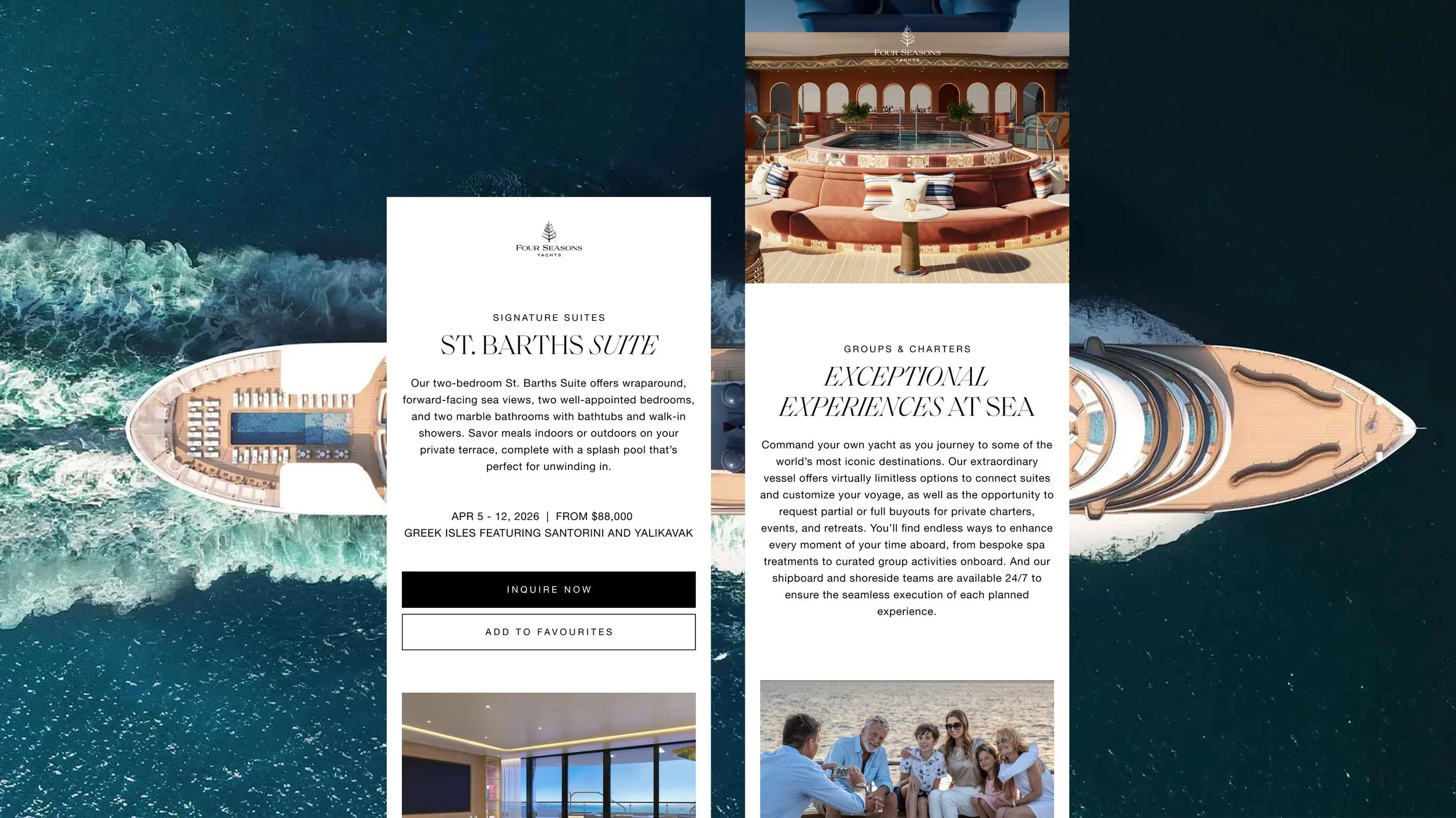
Market context that shaped the strategy
Product outcomes
Luxury marine tourism is growing: the global yacht charter market is estimated around $8.3B in 2024 and projected to grow over time, reinforcing the need for digital journeys that can capture and convert demand.
Leisure travel demand is expanding long term, with BCG projecting continued growth in leisure overnights and spending, which increases competitive pressure on digital acquisition and conversion experiences.
Luxury travel remains resilient, with Virtuoso reporting strong year over year sales trends among luxury advisors, reinforcing the importance of premium experiences that support high consideration purchases.
People-First Approach
+35% booking completion lift through flow simplification and decision clarity.
A Focus on Quality
-20% drop-offs through analytics-driven iteration and UX refinements.
Reliability To Count On
+40% faster execution through the design system and developer-ready documentation.
Proven Process, Flexible Execution
Introduced conditional UX logic for return users (Request to Reserve continuity) and reduced broken booking moments.
My role across the 3-year product design & management
Led end-to-end UX and UI direction across activation and lead capture, self-service booking, personalization, and check-in readiness, ensuring a consistent luxury standard across mobile and desktop.
Set product level UX strategy and defined the core journeys, decision points, and success metrics, then translated them into release-ready flows, wireframes, and high-fidelity UI.
Owned interaction design for complex system behavior, including Reserve vs Request states, temp hold and return user continuity, error and empty states, and progressive disclosure patterns that reduced decision friction.
Partnered closely with product, engineering, and operations to align constraints, sequencing, and tradeoffs, running working sessions to unblock dependencies and maintain delivery momentum across releases.
Built and maintained component standards and page templates aligned to the design system, specifying component behavior, accessibility, and responsive rules so teams could ship faster with less rework.
Produced developer-ready documentation, including annotated flows, interaction specs, acceptance criteria, and handoff guidance, improving build quality and reducing QA churn across a large cross-functional team.
Led stakeholder reviews and executive readouts, grounding design decisions in research signals, analytics insights, and service team feedback to drive alignment and confident approvals.
Mentored designers through critique and collaboration rituals, raising craft, consistency, and decision quality while maintaining a strong feedback loop with engineering and QA.
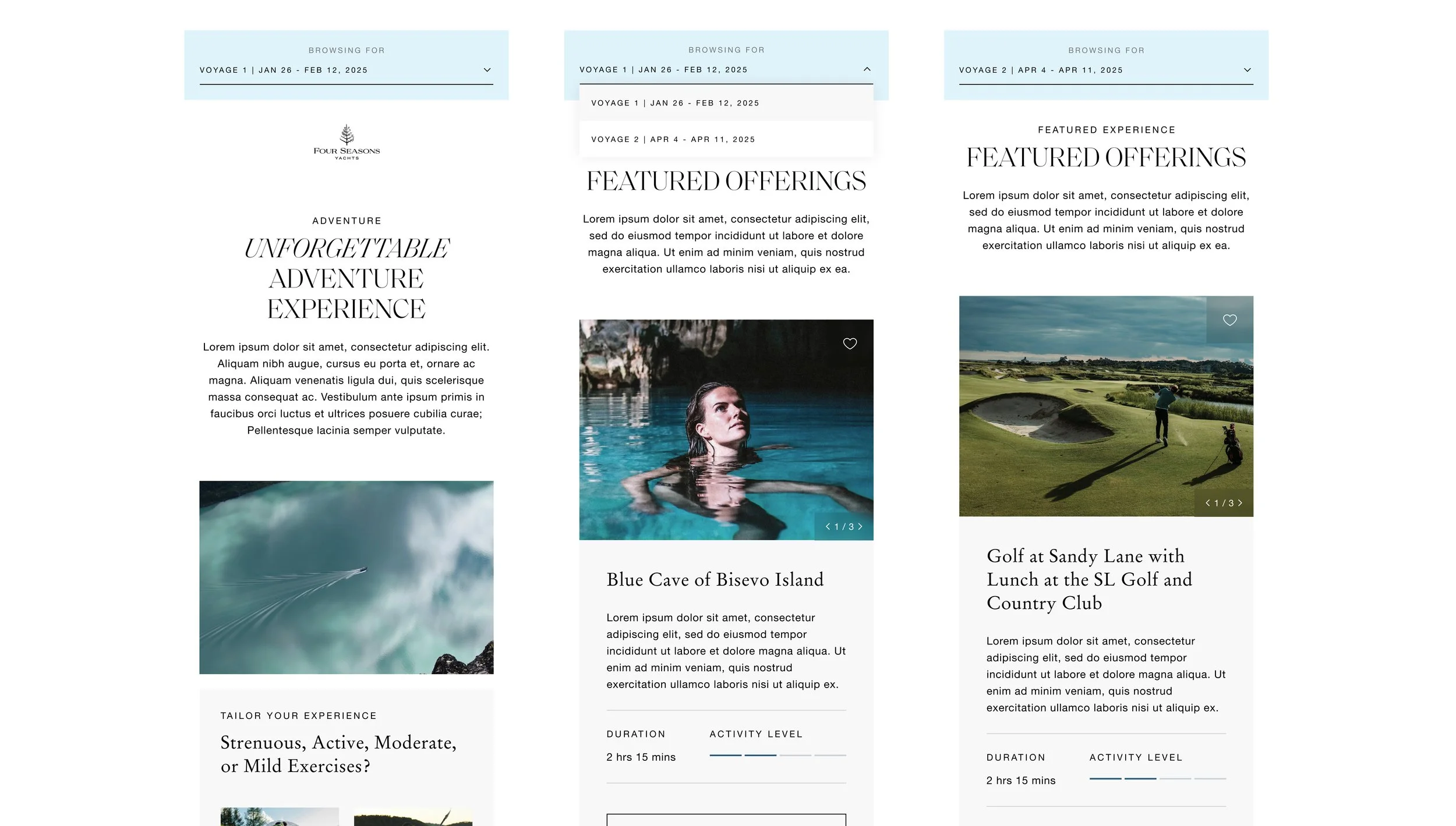
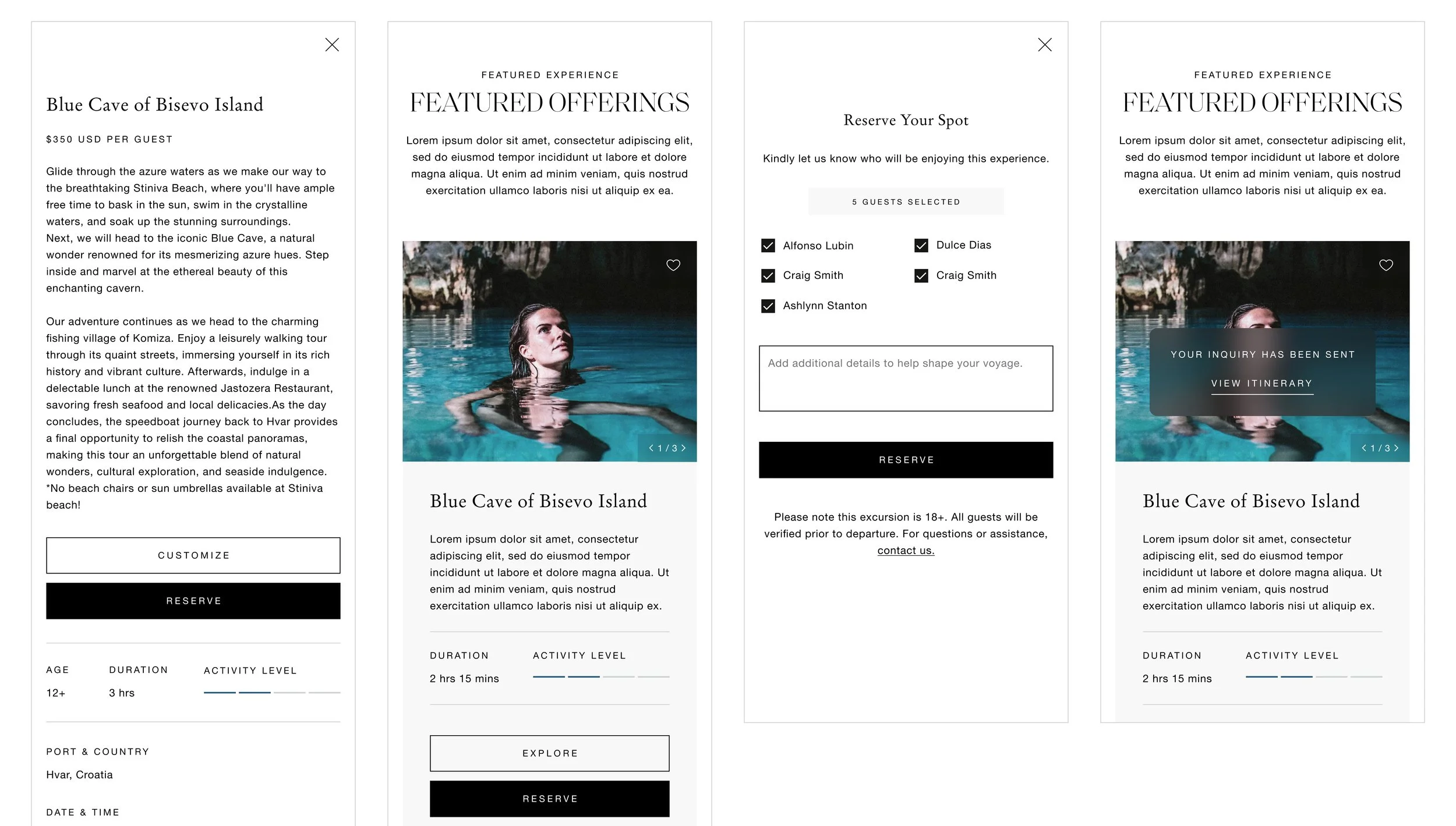
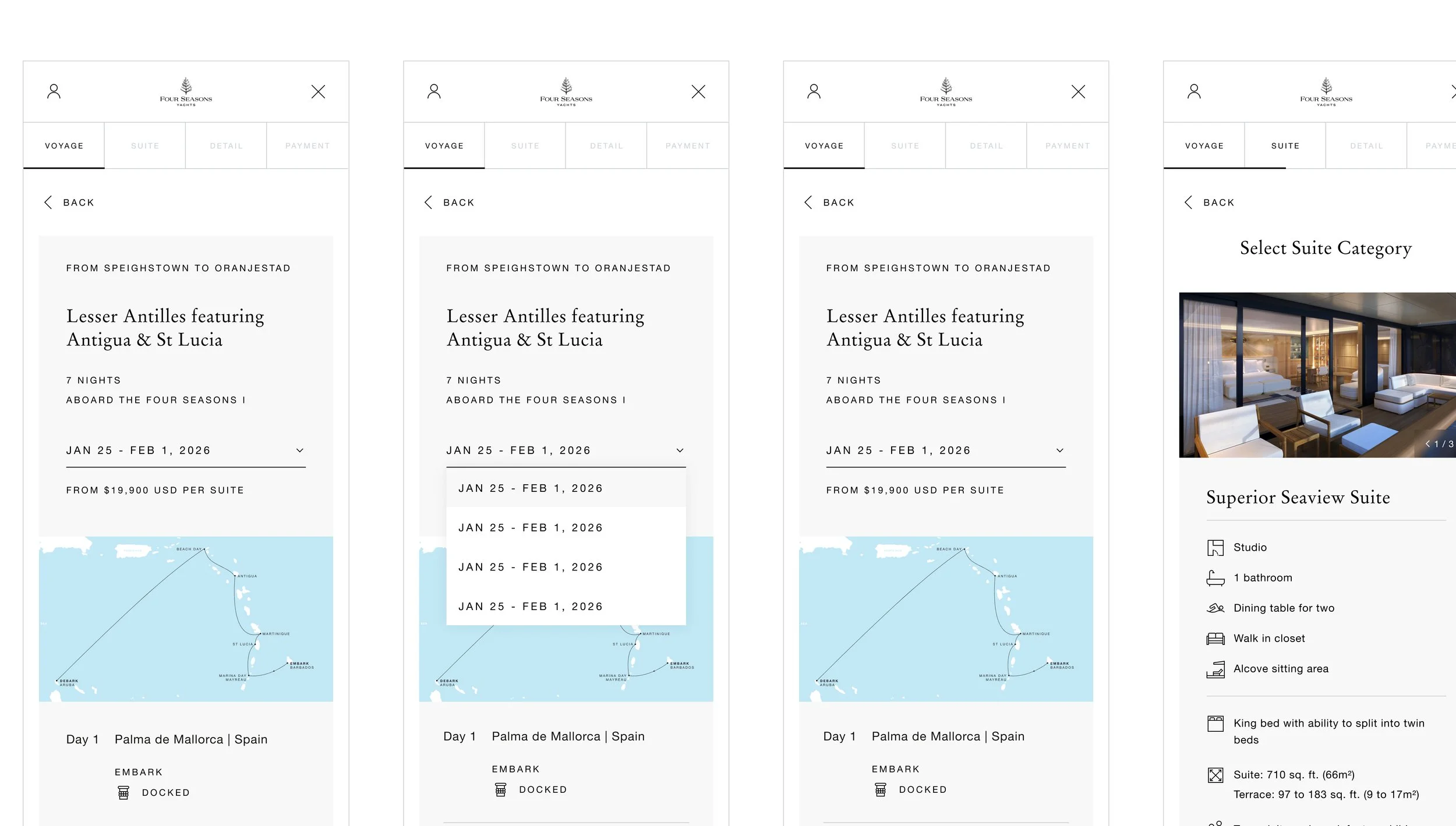
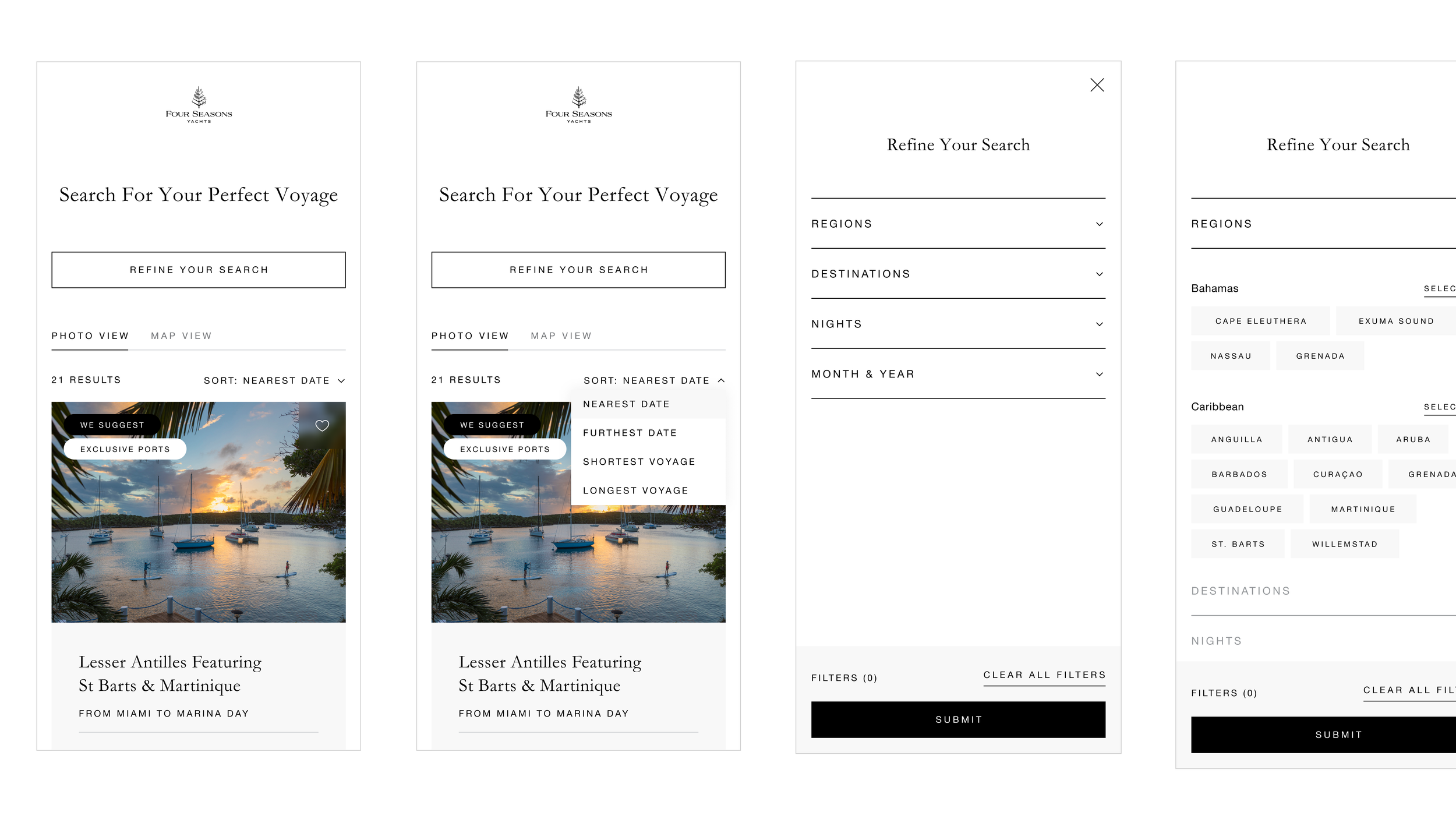
Consumer Tension
Ultra luxury guests behave differently from mainstream travel shoppers. They do not just browse for a deal; they look for confidence, discretion, and proof that the experience will match the price. Before they share personal details or commit, they want clarity on what is included, what is available in real time, and what happens next. They expect the interface to feel calm and premium, with minimal friction, while still supporting complex decisions like voyage selection, suite comparisons, guest count constraints, and high-value deposits. They also expect a hybrid service model: the ability to self-serve when they are ready and immediate access to a Personal Yacht Consultant when uncertainty arises. That meant every moment had to reduce doubt, protect momentum, and preserve continuity across sessions so the experience never felt like it “forgot” them.
What we learned about user behavior and expectations
Signals we used to validate tensions
Experience Design Pillars
Calm Luxury, Always
Intent: Make complexity feel effortless and premium.
Web: spacious layouts, restrained motion, clear hierarchy for long-form exploration.
Mobile: quiet, focused screens with progressive disclosure and minimal input friction.
Design cues: generous whitespace, confident typography, low-noise UI, clear primary actions.
Decision Confidence at Every Step
Intent: Reduce uncertainty in high-stakes choices.
Web: side-by-side comparisons for voyages, suites, and inclusions.
Mobile: simplified compare, smart summaries, and “what this means” explanations.
Key components: compare table, inclusion breakdown, pricing clarity blocks, availability messaging, reassurance microcopy.
White Glove Support, On Demand
Intent: Self serve first, expert help exactly when confidence dips.
Web: concierge entry points at key decision moments, context shared automatically.
Mobile: quick access support, async messaging, and call scheduling.
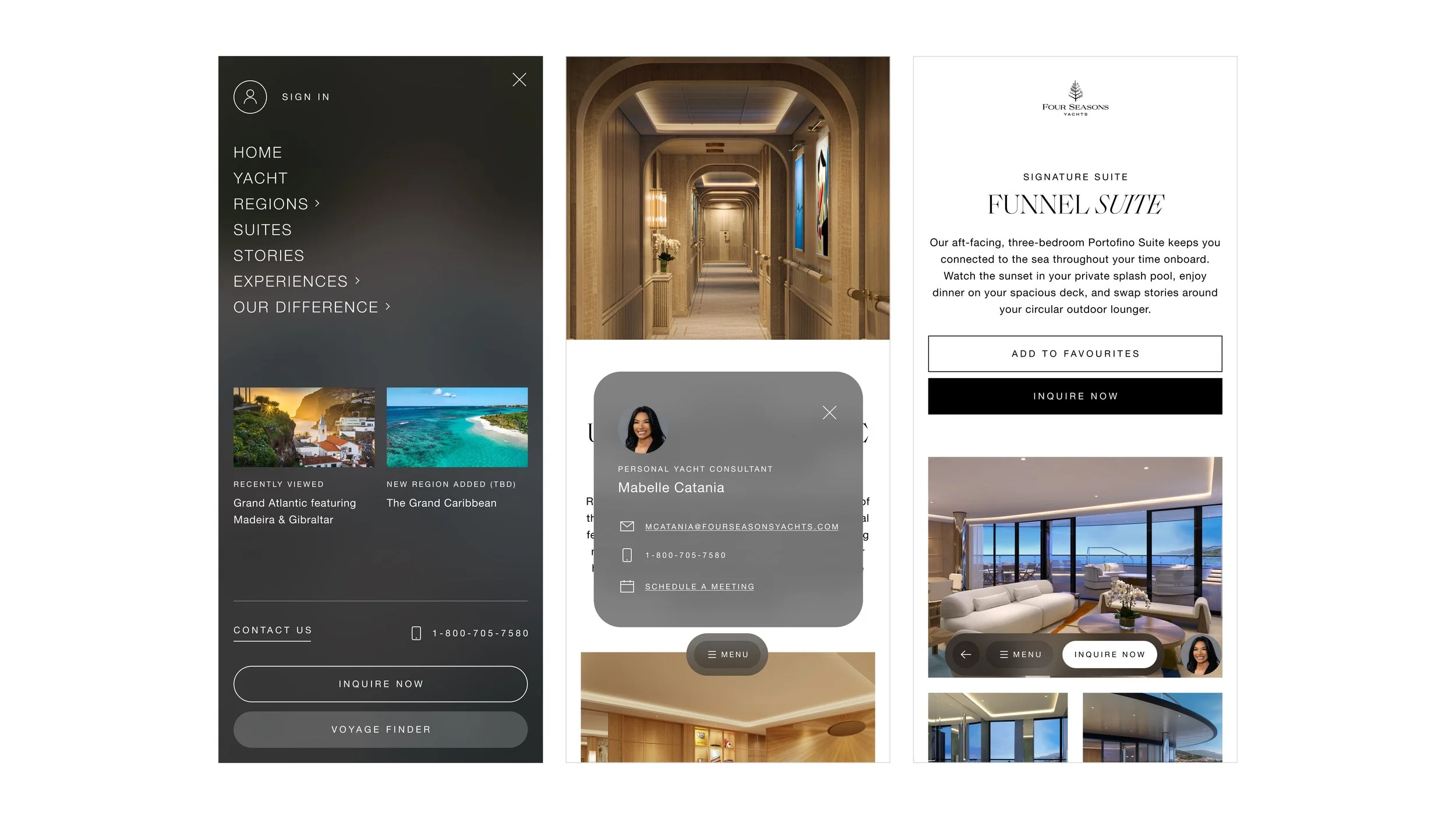
Key components: PYC module, contextual help drawer, contact options, “share my selections” handoff to support.
Trust, Privacy, and Responsibility
Intent: Discretion and integrity are part of the UX.
Web: transparent data capture, clear value exchange, accessible design.
Mobile: secure defaults, minimal input, and clear permissions.
Key components: secure sign-in, privacy-forward forms, accessibility standards, sustainability cues where relevant.
Guided Self-Discovery
Intent: Let guests explore like a curator, not a shopper.
Web: Voyage discovery with filters that feel editorial, not transactional.
Mobile: bite-sized exploration, saved collections, and “continue where you left off.”
Key components: Voyage Finder, destination storytelling modules, preference chips, “Because you liked” recommendations.
A Living Product That Keeps Improving
Intent: Build a platform designed for iteration, not a one-time launch.
Web: measurement-ready templates and content modules that can evolve without redesigning pages.
Mobile: lightweight experiments, fast updates, and clear pathways to test improvements.
Key components: KPI tagging and event-tracking plan, modular UI patterns, experiment-friendly components, release notes, and an iteration log tied to drop-off points.
Readiness and Check In as a Guided Path
Intent: Extend the product beyond booking into pre-voyage confidence.
Web: full planning view, documents, preferences, and milestones.
Mobile: day-of readiness, step-by-step checklists, and time-sensitive updates.
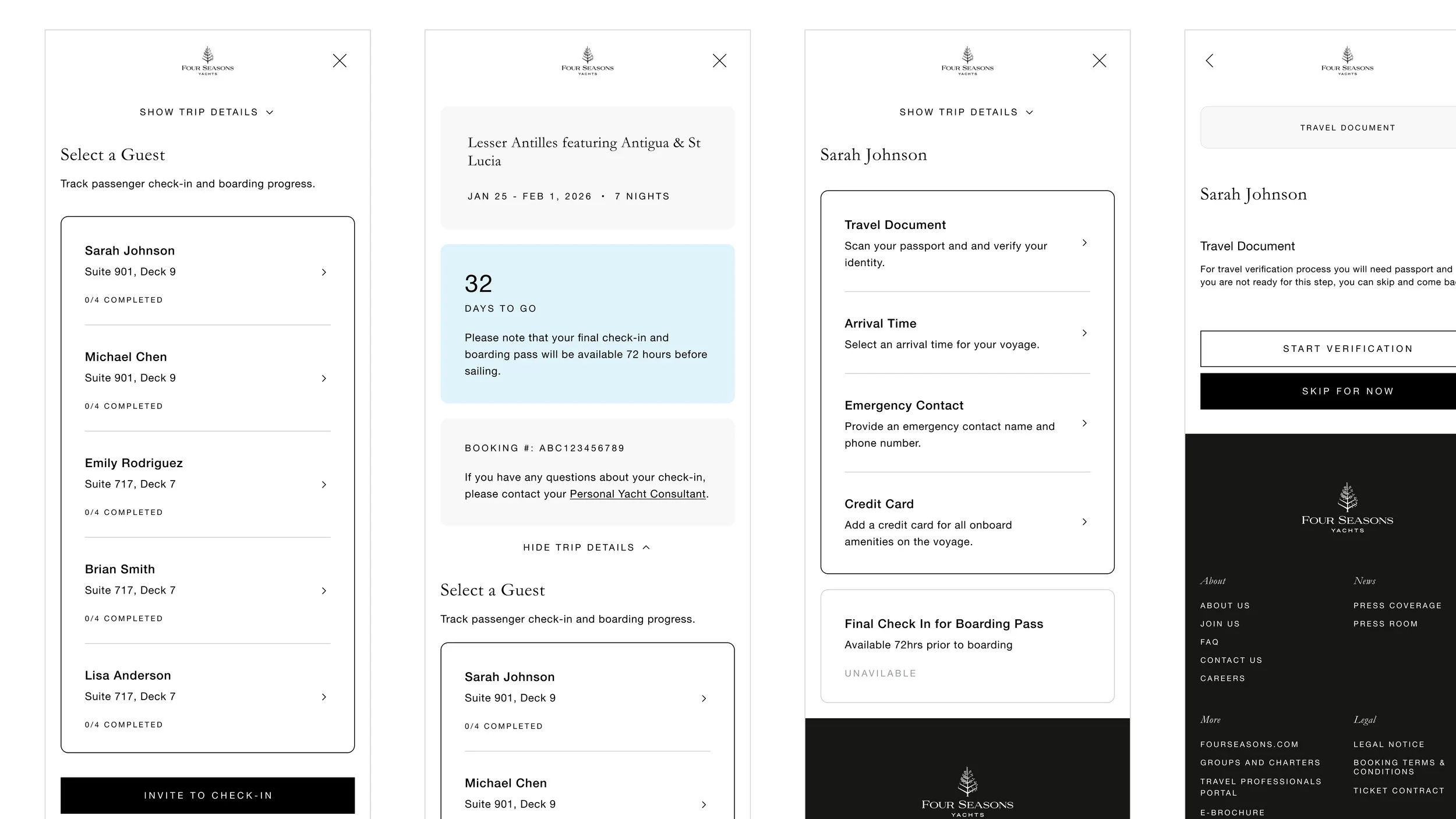
Key components: readiness timeline, task checklist, document wallet, preference forms, alerts, and confirmations.
Seamless Continuity and Momentum
Intent: The experience never “forgets” the guest.
Web: persistent saved state across sessions, clear return entry points.
Mobile: resume cards, reminders, and lightweight re-entry flows.
Key components: saved trips, favorites, recently viewed, hold timer states, “Request to Reserve” return state patterns.
Big ideas, real impact.
View full detailed case study. Request for access.